Wire Fence Cost 2026: Per-Foot Pricing by Mesh Type
Real wire fence pricing for 2026: $3 to $15 per linear foot installed by mesh type. Hog wire, woven wire, welded mesh, chicken wire.
A typical wire fence installed in 2026 costs between $3 and $15 per linear foot depending on mesh type, gauge, and height. The cheapest is chicken wire on basic T-posts ($3 to $5/ft). The most expensive is heavy welded-wire mesh with treated wood posts ($10 to $15/ft). Standard hog wire and woven wire (the agricultural-style mesh many homeowners want) lands in the middle at $5 to $9/ft installed.
Wire fence is a broad category. Most searches for "wire fence cost" actually mean chicken wire, hog wire, woven wire (field fence), welded wire mesh, or wood-and-wire hybrid. Chain link is technically wire fence too, but it has its own dedicated cost page.
What that per-foot number leaves out: how mesh gauge changes both cost and lifespan, why post setting matters more for wire than for solid fences, and where the money actually goes.

A typical wire fence installed in 2026 costs between $3 and $15 per linear foot depending on mesh type, gauge, and height. The cheapest is chicken wire on basic T-posts ($3 to $5 per foot). The most expensive is heavy welded mesh with treated wood posts ($10 to $15 per foot). Standard hog wire and woven wire (the agricultural-style mesh many homeowners want) sits in the middle at $5 to $9 per foot installed.
Wire fence is a broad category. Most searches for "wire fence cost" actually mean one of these:
Chain link is technically wire fence too, but it has its own dedicated cost page. See Ergeon's chain link fence cost guide for that material specifically.
What that per-foot number leaves out: how mesh gauge changes both cost and lifespan, why post setting matters more for wire than for solid fences, and where the money goes.
A national-average answer like "$5 to $10 per linear foot" is fine as a floor. It isn't enough to budget an actual project. Five things drive most of the spread:
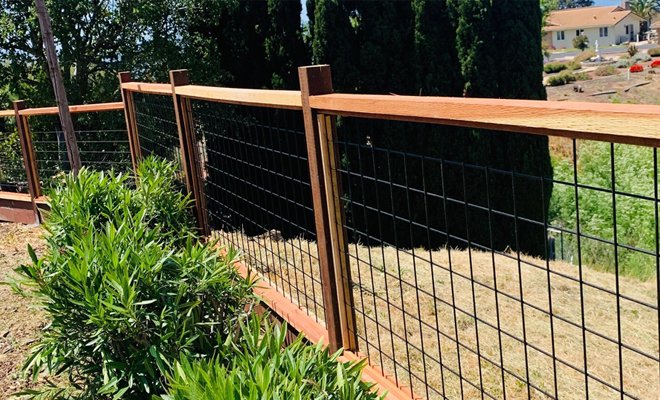
The pricing below comes from industry-standard wire fence rates (manufacturer published specs, agricultural fence supplier surveys, retail pricing at farm-supply stores like Tractor Supply Co and Behlen Country) plus Ergeon's perspective on the wood-and-wire hybrid installations we offer in certain markets.
Industry-typical 2026 installed pricing by wire fence type:

State and regional variation: California and Northeast labor rates typically run higher than rural Texas, Florida, and Midwest agricultural-supply markets. Wire fence is most cost-efficient when installed in long straight runs on accessible flat ground; pricing goes up on hillside or wooded terrain.
If you're installing wire fence on agricultural land for livestock or conservation purposes, you may qualify for USDA cost-share assistance. The NRCS Environmental Quality Incentives Program (EQIP), Practice 382 "Fence" typically covers up to 75% of installation cost for eligible agricultural producers (up to 90% for beginning, limited-resource, or historically underserved producers). Payment rates vary by state, fence type, terrain, and program year, check with your local NRCS office for current rates.
This applies to working agricultural operations, not residential or hobby installations.
For most professional installation work, the customer's payment splits two ways: the bulk goes to the installer team (materials plus on-site labor), and the rest covers project management, permits, warranty, and overhead. The overhead share typically runs 20-30% across the home-improvement trades, with smaller projects on the higher end (fixed costs spread over fewer dollars).
For wire fence specifically, labor is a relatively larger share than on a typical wood or vinyl fence project because:
.jpeg)
Six factors that can affect the overall cost of a wire fence quote.
1. Mesh type and gauge. The single biggest cost lever. See the per-foot breakdown above. Lighter gauges (chicken wire range, 19-22 ga) cost less and corrode faster; heavier gauges (welded mesh, 9-12 ga) cost more and last longer.
2. Coating class. Bare galvanized is cheapest but corrodes fastest. Class 3 galvanized lasts roughly 2.5x longer than Class 1 per Red Brand's coating-class guide. Vinyl-coated (PVC over galvanized) extends life further in humid or coastal climates and adds the most upfront cost.
3. Height. 4-foot is the baseline for ag and garden use. 5-foot adds modestly more. 6-foot adds meaningfully more (more material, more post depth). Heights above 6 feet typically require commercial-grade posts and bracing.
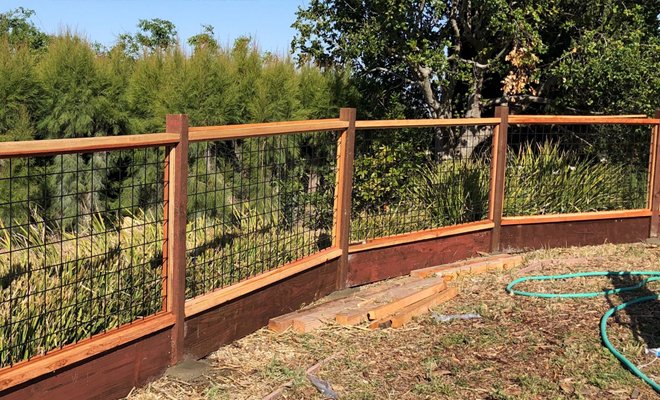
4. Post type and spacing. T-posts spaced 8 to 12 feet apart are cheapest. Wood posts spaced 8 to 10 feet apart cost more per post but provide better corner anchoring and visual appeal. Most wire fences mix wood corner/end posts with T-post line posts.
5. Gates. Farm gates run from simple tube-style gates (lightest) up to heavy welded-mesh and double-leaf drive gates. Major retailers like Tractor Supply Co and Behlen Country publish current gate pricing online; check there for size and style options.
6. Site conditions. Flat, brush-free, accessible terrain is fastest. Hillside, wooded, or rocky soil meaningfully adds labor time. Rural properties without truck access also add hauling time.
Bracing and corner posts. Wire fence requires properly braced corners and ends to hold mesh tension. Skipping H-brace or panel-brace assemblies at corners is the most common cause of wire fence sag and premature failure.
How much does a wire fence cost in 2026? Installed: $3 to $15 per linear foot depending on mesh type and post choice. Chicken wire is the cheapest at $3 to $5 per foot; welded mesh with wood posts is the most expensive at $10 to $15 per foot. Hog wire and woven wire (the typical agricultural-style) sits in the middle at $5 to $9 per foot.
What's the difference between hog wire and woven wire fence? Both are agricultural-style mesh fences. Hog wire (often called "cattle panel") is rigid welded mesh sold in 16-foot panels. Woven wire (field fence) is flexible knotted mesh sold in 100 to 330-foot rolls, typically 12.5-gauge per Red Brand's field-fence specs. Hog wire is faster to install but more expensive per linear foot. Woven wire is cheaper per foot but takes longer to stretch.
What gauge is chicken wire? Chicken wire is typically 19 to 22 gauge, much lighter than agricultural field fence. The lighter gauge keeps it inexpensive and easy to bend around frames, but corrodes faster than heavier wire. Don't confuse chicken wire gauge with the heavier 9 to 12.5 gauge used for hog wire, woven field fence, and welded mesh.
Can I use wire fence for residential property? Yes, and it's increasingly popular for rustic-residential aesthetics. Wood-and-wire hybrid fences (vertical wood posts with horizontal wood rails and wire mesh infill) are especially common in larger-lot suburban areas. Check HOA rules, since some restrict wire fence to back yards only.
Does Ergeon install wire fences? Ergeon installs wood-and-wire hybrid fences as a specialty in certain markets. We don't typically install standalone agricultural-grade wire fencing as a primary product. For wood-and-wire installations, request a free quote and we'll let you know if it's available in your area.
How long does wire fence last? Service life depends mostly on coating class. Per Red Brand's longevity guide, Class 3 galvanized fence can last 25+ years properly installed; Class 1 galvanized lasts roughly 40% as long. Vinyl-coated wire extends life further in humid or coastal climates. Posts often outlast the mesh, and most wire fence "replacements" replace the mesh while reusing the posts.
Are there cost-share programs for wire fence? For agricultural operations, the USDA NRCS EQIP Practice 382 covers up to 75-90% of fence installation cost for eligible producers. Payment rates vary by state and fence type, check with your local NRCS office. This doesn't apply to residential or hobby installations.
Do I need a permit for a wire fence? Usually no for agricultural-style wire on agricultural-zoned property. Yes for residential property in most jurisdictions, especially anything over 6 feet tall or in a front yard. Permit cost varies by jurisdiction.
How do I get an accurate quote? Get three quotes from licensed fence installers in your state. Ask each to itemize mesh (by gauge and coating), posts (by type and spacing), gates, bracing, and labor separately. Reject any quote that bundles everything into a single line because surprises hide there.
A professional wire fence installed in 2026 runs $3 to $15 per linear foot depending on mesh type and post choice. For a typical 150-foot residential or small-acreage installation, that's $450 to $2,250 standalone.
Three things that move the price more than people expect:
If you're running an agricultural operation, check whether USDA-NRCS cost-share applies before getting quotes; the program can cover most of the install cost for eligible producers.
Ready to get an actual number for your specific fence? Request a free Ergeon fence estimate and we'll help you decide between wire, wood-and-wire hybrid, or another fence material that better fits your use case.
 Fence Costs
 Fence Costs
 Fence Costs
%20(1).png)


