Deck Cost 2026: Real Installed Prices by Material
Real deck pricing for 2026: $5,000 to $25,000 typical project, $25 to $60 per square foot installed. By material, size, height, region.
A typical deck project installed in 2026 costs between $5,000 and $25,000, with premium materials and larger sizes pushing past $40,000. On a per-square-foot basis, the typical range is $25 to $60 installed — pressure-treated lumber on the low end, mid-grade composite in the middle, tropical hardwood at the top. A standard 200-square-foot deck lands around $8,000 to $14,000 in mid-range materials.
Three project examples that span the realistic range:
The context AI cost summaries miss: deck pricing scales non-linearly with size and height, the material you pick locks in 20-year maintenance costs as much as upfront cost, and the "per square foot" number breaks down for raised or multi-level decks.
A deck professionally installed in 2026 runs $25 to $80 per square foot. The 2025 Zonda Cost vs Value Report puts the national-average wood deck addition at $18,263 (16x20 ft, about $57/sqft) and the composite deck addition at $25,096 (about $78/sqft). Real-world ranges in dealer surveys are wider than the national averages because of material tier choice.
For a standard 200-square-foot deck, expect $5,000 to $16,000 for pressure-treated wood, $10,000 to $18,000 for mid-grade composite, and $15,000 to $25,000+ for premium composite or tropical hardwood.
A deck addition is one of the strongest resale ROI projects you can do, but the direction of the wood-vs-composite trade-off is the opposite of what older cost guides claim. The current data:
Both numbers come from the 2025 Zonda Cost vs Value Report and both outperform most interior remodels for resale ROI. The direction is worth flagging because plenty of cost guides still claim composite recoups more than wood (and that both recoup 50-65%), neither of which matches the current data.
The practical implication: wood recoups more on a percentage basis because the upfront cost is lower for similar usable square footage; composite recoups less on percentage but more in absolute dollars. The right pick depends on how long you plan to own the home and how much maintenance you're willing to do over that time.
Real installed cost ranges by material category. For brand-by-brand composite tier specifics (Trex, Fiberon, TimberTech AZEK), see Ergeon's composite deck cost guide.
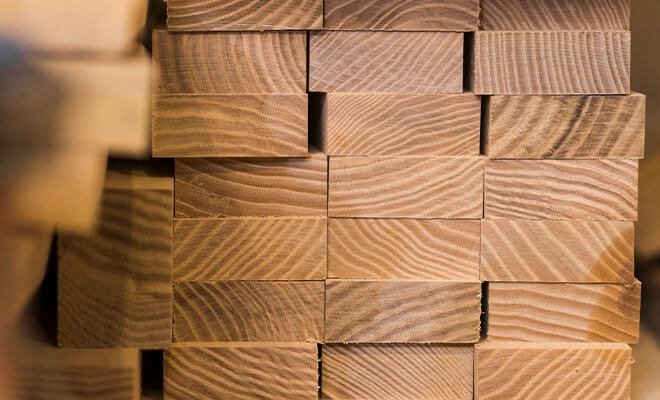
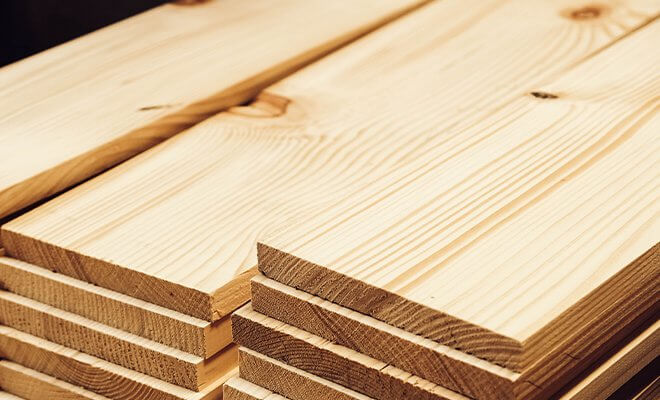

Composite and wood target different priorities. Both are reasonable picks; the right one depends on your trade-offs.
Wood (pressure-treated, cedar, or redwood) is meaningfully cheaper upfront, the 2025 Zonda Cost vs Value Report has wood at $18,263 vs $25,096 for composite, a 27% premium for composite. Wood looks and feels like natural lumber and can be stained any color. Trade-off: wood needs periodic refinishing (frequency varies by species and climate) and is more vulnerable to weather damage, insect damage, and ground-line rot.
Composite (wood-plastic or capped cellular PVC) costs more upfront but needs almost no maintenance. No staining, sealing, or refinishing. Capped composite holds color via its hard plastic shell. Composite carries strong manufacturer warranties, typically 25 to 50 years on mid-to-premium lines, with limited-lifetime coverage on top cellular PVC products. Trade-off: higher upfront cost, and the look is engineered rather than natural lumber (though modern composite has gotten convincing).
For homeowners staying in the home long-term who want minimal upkeep, composite usually wins the total-cost-of-ownership math after several years. For shorter ownership horizons or homeowners who enjoy the refinishing routine, pressure-treated or cedar is hard to beat on upfront cost.
Beyond material category, four variables drive the budget.
Deck height. Ground-level decks (under 30 inches) skip railings, most permit requirements, and stairs. Raised decks (30 inches to 8 feet) add all three. Elevated decks (above 8 feet) need structural engineering and inspection.
Deck size. Larger decks generally have lower per-square-foot cost because mobilization and design time spread further. Small decks (under 150 sqft) tend toward the high end of the per-square-foot range; larger decks tend toward the low end.
Railings. Composite or wood railings are the baseline. Cable, glass, or aluminum railing upgrades each carry a premium.
Stairs and stair runs. Multi-step runs with code-compliant railings can become a significant line item on a raised deck.
Site conditions. Footing depth varies by region (frost line where applicable; bearing depth where not). The IRC sets minimum footing depth at 12 inches below grade in non-frost jurisdictions and below the local frost line where applicable. Tree or stump removal, site grading, and access from the road also affect labor cost.
Maintenance burden varies by material.

For brand-specific composite warranty terms see Ergeon's composite deck cost guide. For a direct wood-vs-composite comparison, see wood vs composite decking. For installation guidance, see how to build a deck and deck installation.
How much does a deck cost in 2026? Per the 2025 Zonda Cost vs Value Report, the national average for a 16-by-20-foot deck addition is $18,263 for wood and $25,096 for composite. Real-world ranges run $25 to $80 per square foot installed depending on material tier, deck height, and metro labor rates.
Is wood or composite cheaper? At install, wood is meaningfully cheaper ($18,263 vs $25,096 national average per Zonda 2025). Over 20 years, composite typically narrows the gap because it needs no restaining and lasts longer. In hot or humid climates the lifecycle math leans toward composite faster.
Does a deck add value to my home? Yes, substantially. Wood deck additions recoup 94.9% of cost at resale and composite recoups 88.5% on the national average per Zonda 2025. Both outperform most interior remodels for resale ROI.
Is composite worth the extra cost over wood? Depends on how long you'll own the home and your tolerance for maintenance. Composite costs about 27% more upfront on average but needs almost no maintenance, while wood needs periodic refinishing. Over a long ownership horizon in a hot or humid climate, composite usually catches up on total ownership cost. For brand and tier specifics, see composite deck cost guide.
How long does a deck last? Lifespan varies by material and maintenance discipline. Pressure-treated wood lasts 40+ years structurally (per USDA Forest Products Laboratory), though the visible surface may need refinishing every few years. Capped composite is warranted 25 to 50 years by tier. Cellular PVC carries a limited lifetime product warranty.
Do I need a permit for a deck? Permitting is based on size and height, not material. Almost always required for anything raised over 30 inches, attached to the house, or above 200 sqft. The IRC sets a 12-inch minimum footing depth below grade in non-frost jurisdictions, deeper where frost is a factor. Permit cost varies widely by jurisdiction.
How do I get an accurate quote? Get three quotes from licensed deck contractors. Ask each to itemize decking material (specify brand and tier), framing, railings, stairs, footings, and permits. Reject any quote that bundles everything into a single "deck install" line. Match the material tier across quotes, quotes mixing pressure-treated wood with mid-grade composite aren't comparable.

Deck additions are among the strongest resale ROI projects you can do, and the direction matters: wood actually recoups more on a percentage basis than composite (94.9% vs 88.5% per Zonda 2025), the opposite of what older cost guides claim. For long ownership in maintenance-averse households, composite usually wins on total ownership cost over time. For shorter horizons or homeowners willing to keep up the refinishing cycle, wood stays the lower-total-cost choice. For brand-tier specifics within composite, see Ergeon's composite deck cost guide.
Ready for an actual number? Request a free Ergeon deck estimate.


 Deck Costs
%20(1).png)
 Deck Costs
 Deck Costs


