Fence Removal Cost 2026: $3-$8 Per Linear Foot Real Pricing
Real fence removal pricing for 2026: $3 to $8 per linear foot standalone, much cheaper bundled with a new install. When repair may be the better path.
A typical fence removal project in 2026 costs between $3 and $8 per linear foot for a standalone removal job, with simpler chain link runs at the low end and concrete-set wrought iron at the high end. For a typical 150-foot fence, that's roughly $450 to $1,200 total for removal alone.
The much cheaper path most homeowners miss: bundling removal with a new fence install. When the install crew is already on-site, removing the old fence is essentially a marginal cost — Ergeon's data shows the demo-and-haul line item adds roughly $1 per linear foot to a typical install. That's the additional cost when a crew is already on-site for an install, not the cost of dispatching a crew solely to remove a fence. Standalone removal absorbs the full mobilization and disposal trip on its own, which is why standalone pricing runs several times higher.
What that per-foot number leaves out: when removal isn't actually what you need, what specifically drives the price, and how to read a fence removal quote.

A national-average answer like "$3 to $5 per linear foot" is fine as a floor. It isn't enough to budget an actual project. Five things get averaged away:
The pricing below leans on industry-standard fence removal pricing (HomeAdvisor, Angi, RSMeans 2025) plus Ergeon's adjacent data: 4,398 completed Wood Fence Repair or Partial Replacement orders across 18 states give us strong visibility on what fence-condition-fix work actually costs.
A typical $900 standalone fence removal project (150 feet of wood fence, soil-set posts, modest brush) breaks down roughly:
The split shifts toward more disposal cost on heavier materials (metal, concrete-anchor systems) and more labor cost on jobs with vegetation overgrowth or limited site access.
Different materials remove differently. Pricing ranges below are typical 2026 industry rates for standalone removal jobs in the contiguous US.


The fence removal industry doesn't typically break pricing out by height (a 4-foot vs 6-foot removal is similar labor) but does charge more for fences with kickboards, lattice tops, or other add-ons because those increase disposal volume.
Six variables drive most of the price variance.
1. Fence length. Linear footage scales labor and disposal. Smaller jobs have a fixed minimum (typically $200 to $400 for any single-day visit), so a 30-foot removal is closer to $10/ft installed; a 300-foot removal is closer to $3-$4/ft.
2. Post setting. Soil-set posts pull with a fence-post puller in 2 to 5 minutes per post. Concrete-set posts require either digging out the concrete (15 to 30 min each) or cutting the post at grade and leaving the footing (compromises future install). Concrete-set posts add $25 to $50 per post over soil-set.
3. Material type. Reviewed above. Wood mid-range, chain link cheapest, metal most expensive.
4. Vegetation overgrowth. Roots from shrubs, ivy, or trees that have grown into the fence line add removal time. A clean fence line is fastest; a fence with 5+ years of ivy is 2 to 3x the labor.
5. Site access. Truck-accessible fence lines are cheapest. Backyard-only access (carry materials through gates) adds 20 to 40% to labor. Hillside or terraced lots add even more.
6. Disposal location. Some municipalities have free residential drop-off; most charge $20 to $80 per yard of debris. Treated lumber sometimes can't go to standard landfills and needs specialty disposal at higher rates.
Brush clearing as a related line. If you're removing the fence to install a new one, the brush-and-vegetation clearing on the fence line typically continues into install prep. A combined "remove + clear + prep for new install" line on a quote is usually cheaper than getting these as three separate services.
Removing the whole fence makes sense when the structure is compromised top to bottom. But if the damage is localized (a few leaning posts, a section knocked down by a tree, rotted bottom rails on otherwise-sound pickets), partial repair can preserve what's working and save you from a full replacement. Repair is case-by-case and a contractor walking your fence line will catch things a cost guide can't, but here are the questions worth asking before deciding.
The pragmatic move: get both quotes from any reputable installer (a removal-and-replace quote and a repair quote), and let the contractor's site visit make the call. The right answer depends on conditions a cost guide can't see.
Average DIY savings on a 150-foot fence removal: $400 to $800 in labor, assuming you already own a truck and don't need to rent disposal capacity. Fence removal is one of the more DIY-accessible projects compared to fence installation. There's no precision work involved, just pulling and hauling.

Cases where DIY usually works out:
Cases where DIY usually doesn't work out:
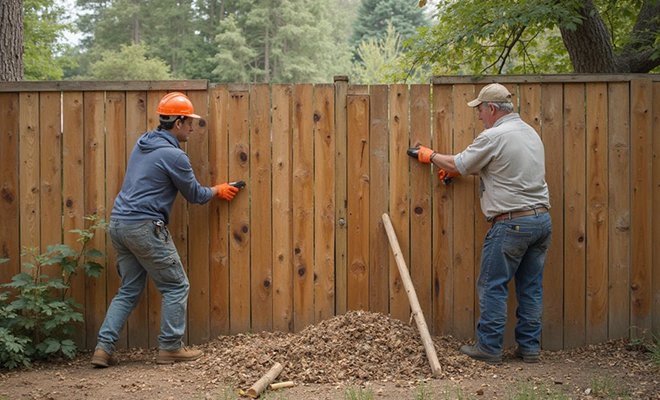
The honest math: if you're replacing the fence with a new one from Ergeon or another installer, bundling removal into the install quote almost always beats DIY. The crew is already on-site, has the tools, and includes hauling. Per Ergeon's data, the bundled demo-and-haul line item adds roughly $1/ft to the install, same or less than your DIY truck-mileage and dump fees once you tally them. The catch: this only works because the crew is already there for the install. A standalone removal-only visit is a different cost structure entirely.
How much does fence removal cost in 2026? Standalone removal (a dedicated visit just to remove your fence) runs $3 to $8 per linear foot per industry sources, roughly $450 to $1,200 for a typical 150-foot wood fence. Bundled removal (when the same crew is on-site for a new fence install) is much cheaper because there's no separate mobilization, equipment, or disposal trip. Ergeon's data shows the bundled demo-and-haul line item adds roughly $1 per linear foot to a typical install.
Should I remove the old fence myself or hire it out? DIY makes sense for short runs of soil-set wood or chain link if you have truck access and a local landfill. Hire it out if you have concrete-set posts, metal fencing, overgrown vegetation, or you're planning a new fence install anyway (bundle the removal into the install quote).
Can I combine fence removal with a new fence install to save money?
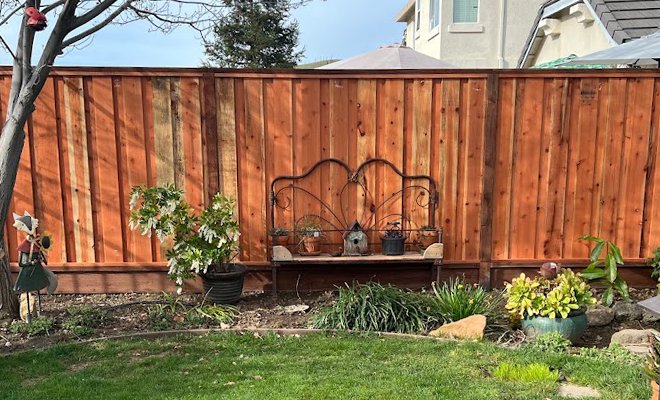
Yes, and you almost always should if you're replacing. Per Ergeon's data on completed wood installs, bundling the removal as a line item on the install order adds roughly $1/ft, significantly less than industry-typical standalone removal pricing. The economics work because the crew is already mobilized for the install: no separate truck trip, no separate equipment haul, no separate disposal run. Request a free new fence estimate and ask for the removal line item itemized so you can see the bundle math directly.
What about extracting fence posts set in concrete? Concrete-set posts are the single biggest source of removal cost surprises. Two options: dig out the entire concrete footing (slowest, most expensive at $25 to $50 per post in labor) or cut the post at grade and leave the footing buried. The second option works if the new fence's post locations don't overlap with the old ones, but limits future flexibility.
Do I need a permit to remove a fence? Usually no, since removing a fence rarely requires a permit on its own. If you're replacing it, the permit attaches to the new install, not the removal. Pool-code fencing is an exception: removing a pool barrier without putting a temporary one in place can trigger a code violation in many jurisdictions.
Is the fence on the property line and shared with a neighbor? Common situation. Many residential fences sit on or near the property line. Before removing anything, confirm ownership: the original homeowner who built the fence usually owns it, but easements, prior sale agreements, or HOA rules can complicate this. If it's a shared fence, talk to your neighbor before removal. They may want to keep it, share the cost of replacement, or have plans of their own.
Do I need temporary fencing during the removal-to-replacement gap? Sometimes, for pool safety, pet containment, or HOA appearance compliance. Temporary fencing rentals run $1 to $3 per linear foot per week. Most install projects schedule removal and new install within 1 to 7 days so temporary fencing isn't usually needed.
How long does fence removal take? A typical 150-foot wood fence with soil-set posts: 4 to 8 hours for a 2-person crew. Concrete-set posts can double that. Metal fences and overgrown vegetation also add time.
A standalone fence removal in 2026 runs $3 to $8 per linear foot for the typical range, with material type and post setting driving most of the variance. A standard 150-foot wood fence removal lands around $450 to $1,200 total.
Three things that move the price more than people expect:
Ready to get an actual number for your specific fence? Request a free Ergeon fence removal and replacement estimate. We'll quote the removal line separately so you can see the bundled-vs-standalone math directly.
 Fence Costs
 Fence Costs
 Fence Costs
%20(1).png)


