Fence Warranty: What Should Be Covered?d Post
Fence warranty guide: what craftsmanship and material warranties cover, typical exclusions, and how to claim. Free quote now.
A fence warranty should come in two parts. The installer's craftsmanship warranty covers defects in how the fence was built: fit, finish, fastening, and alignment. The manufacturer's material warranty covers defects in the components themselves, such as vinyl that cracks or a powder coat that peels. Both should be in writing, attached to the quote or contract, with the duration, the exclusions, and the claim process spelled out. Ergeon's warranty, described in its homepage FAQ, works exactly this way: a craftsmanship warranty plus any manufacturer warranties that apply, backed by a warranty reserve, with the specific terms attached to your quote. Here is what each warranty should cover, what is normally excluded, how coverage differs by material, and how to file a claim without a fight.
The craftsmanship warranty, sometimes called a workmanship or labor warranty, is the installer's promise that the fence was built correctly. It is the more important of the two, because installation errors are what cause most early fence failures, and a manufacturer will not cover a panel that failed because it was hung wrong. A good craftsmanship warranty covers:
Ergeon's craftsmanship warranty covers defects from installation in exactly these four areas. Whoever you hire, ask how long the craftsmanship coverage runs and whether the contractor has a reserve or insurance behind it. A warranty from a company that closes next year is worth nothing, which is why Ergeon maintains a warranty reserve to back its commitments long term.
The materials warranty comes from the manufacturer, not the installer, and covers defects in the product itself. Its length and scope depend on what the fence is made of:
Ergeon's materials warranty covers manufacturer defects in the components used. Ask for the manufacturer's document by name so you know what it says before something fails.
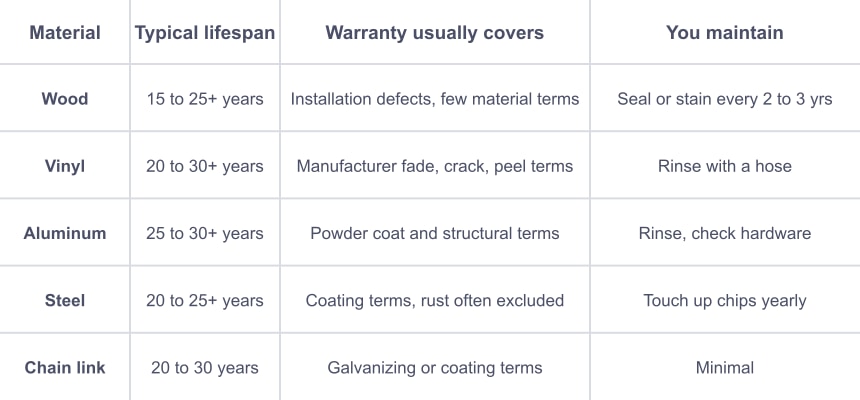
Warranty and lifespan are related but not the same. Ergeon's homepage FAQ gives typical residential lifespans of 15 to 25 or more years for wood with upkeep, 20 to 30 or more for vinyl, 25 to 30 or more for aluminum, 20 to 25 or more for steel, and 20 to 30 for chain link. No warranty runs that long on labor, so the practical question is whether the coverage window is long enough to catch installation problems, which almost always show up in the first few seasons, and whether the material warranty is long enough to matter for a product you expect to keep for decades.
The maintenance column is where warranties are most often voided. Wood that is never sealed, steel with chips left to rust, vinyl with a sprinkler head spraying it daily, or a fence buried in mulch and irrigated soil can all give a manufacturer grounds to deny a claim. Ergeon's wood fence costs and vinyl fence costs guides cover the upkeep each material needs to reach the lifespans above.
Every warranty has exclusions, and they are usually reasonable. Ergeon's homepage FAQ lists the typical set: misuse, acts of nature, work by outside contractors, and owner modifications. In practice that means:
If a contractor's warranty excludes things that are clearly installation issues, such as leaning posts, sagging gates, or popped pickets, that is a warning sign. Those are the exact defects a craftsmanship warranty exists to cover.
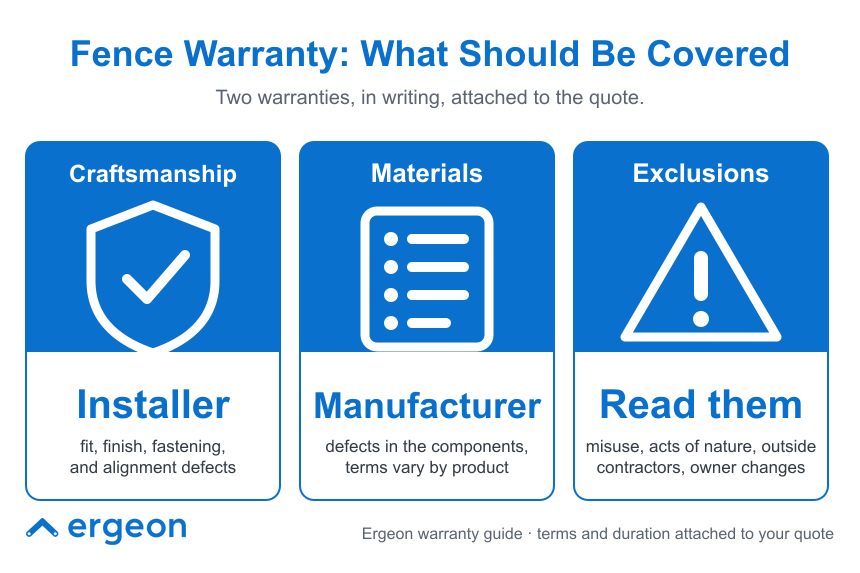
Every Ergeon project is protected by a craftsmanship warranty and any manufacturer material warranties that apply. The craftsmanship warranty covers defects from installation (fit, finish, fastening, and alignment). The materials warranty covers manufacturer defects in the components used; coverage varies by material and supplier, and on many vinyl products it is a lifetime warranty. Craftsmanship coverage runs on its own timeline. Exclusions follow the industry pattern: misuse, acts of nature, outside contractors, and owner modifications. The specific terms and duration are attached to the warranty that comes with your quote, so you see them before you approve anything.
To make a claim, contact the project management team at pm@ergeon.com or 1-888-374-3661. They will confirm coverage, explain how to submit the claim, and give you expected timelines. Because Ergeon quotes are approved online and installation is coordinated by a project manager, your project record, photos, and quote are all in one place when a question comes up years later. Ergeon is licensed, bonded, and insured in every market it serves, more than 20 states, with license numbers in the footer of every ergeon.com page, and it holds a 4.81 out of 5 rating across more than 22,000 verified reviews.
Five questions, all of which should have written answers in the contract:
Ergeon's guide to what a fence contract should include covers where the warranty sits in the rest of the paperwork.
A few habits protect both the fence and your ability to claim on it:
Yes. A warranty covers how the fence was built, not where. If the fence turns out to sit on a neighbor's lot or inside a city setback, moving it is not a warranty claim, and it can cost more than the fence. A scaled site plan settles the location before the posts go in by showing the parcel boundary, the house footprint, and the proposed fence line. A certified site plan from a licensed surveyor often runs $1,000 or more and is only needed when a city specifically asks for one. For most fence projects and permit applications, Ergeon can generate a permit-ready, GIS-based site plan in about 15 minutes for $29, the same GIS site plan Ergeon uses as the base for its own permit filings, with your fence layout and any other documents the city requires added on top.
What should a fence warranty cover?
Two things: installation defects (fit, finish, fastening, alignment) under the installer's craftsmanship warranty, and manufacturer defects in the materials under the product warranty. Both should be in writing with duration, exclusions, and a claim process.
What is not covered by a fence warranty?
Typically misuse, acts of nature, work by outside contractors, owner modifications, normal aging such as wood graying, and damage from neglected maintenance. Installation defects should never be on the exclusion list.
Does Ergeon offer a fence warranty?
Yes. Every project carries a craftsmanship warranty plus any manufacturer material warranties that apply, backed by a warranty reserve. Terms and duration are attached to your quote. Claims go to pm@ergeon.com or 1-888-374-3661.
Do wood fences have a material warranty?
Usually little or none, because wood is a natural product and checking, warping, and graying are normal. Some pressure-treated lumber carries a rot and insect treatment warranty. For wood, the craftsmanship warranty matters most.
Does a fence warranty transfer to a new homeowner?
Some do and some do not. Ask before you sign and get the answer in writing. A transferable warranty is a small but real selling point when you list the house.
Get a free fence quote - Call 1-888-374-3661. Monthly-payment financing is available on qualifying projects.
 Local Guides
 Local Guides
 Local Guides


